
The Mistake Most People Make First
The door won't budge, or it groans halfway up and stalls — and the instinct is to treat it like a frozen door up north. People pour hot water on the bottom seal, spray de-icer they had left over from a trip, or just keep mashing the opener button hoping the motor muscles through. It's a tempting first move because the symptoms genuinely look like the classic "frozen shut" problem: a stuck bottom edge, a door that feels glued to the slab, a motor that strains. But Sunrise doesn't get hard freezes. What's actually happening is almost always moisture and corrosion-related, and forcing the opener to push through resistance is how a sticky seal turns into a stripped gear or a bent track.
The Symptoms, in the Order You'll Notice Them
- The door is stuck at the bottom even though the opener light is on and the motor is running.
- It moves, but sluggishly — noticeably slower than usual, especially in the first few feet.
- The opener strains or grinds before the door starts moving, then it moves fine once it gets going.
- The door reverses on its own partway through closing, as if it hit something.
- Lifting it manually feels heavier than it used to, even with the opener disengaged.
Note which of these you're seeing — it tells a technician where to start before they even touch the door.
The Causes, Checked in Order
1. The Weatherstripping Is Stuck to the Slab
This is the most common cause and the first thing to check, because it's the cheapest to fix. After heavy rain or a humid overnight drop in temperature, the rubber seal along the bottom of the door swells slightly and can press tight against a damp concrete slab, almost like suction. The fix is simple: gently break the seal free by hand (never with the opener), clean the slab and the seal, and let both dry fully. If the weatherstripping has gone stiff, cracked, or is pulling away from the track, it needs replacing — a low-cost repair, but one that prevents the sticking from recurring every time it rains.
2. Rust or Corrosion on the Tracks and Rollers
If the seal isn't the issue, the next stop is the tracks. Salt air near the coast and constant humidity inland both promote surface rust on steel tracks and rollers, even on doors that are only a few years old. Rust creates friction instead of a smooth glide, which is why the door crawls instead of rolling freely. The fix involves cleaning the tracks with a wire brush or fine abrasive pad, checking roller condition, and replacing any rollers that are pitted or no longer turning freely — nylon rollers with sealed bearings hold up better in this climate than older steel ones.
3. Old or Gummed-Up Lubricant
Lubricant that's past its prime doesn't just stop helping — it actively works against you. In humid air, old grease picks up dust and moisture and turns into a gummy paste on hinges, rollers, and the torsion spring. A technician will wipe off the old residue completely before reapplying, because lubricating over gunk just adds a sticky layer. The right product is a silicone-based garage door lubricant, not household oil or WD-40, which attracts more grit than it repels.
4. Spring Tension Has Shifted
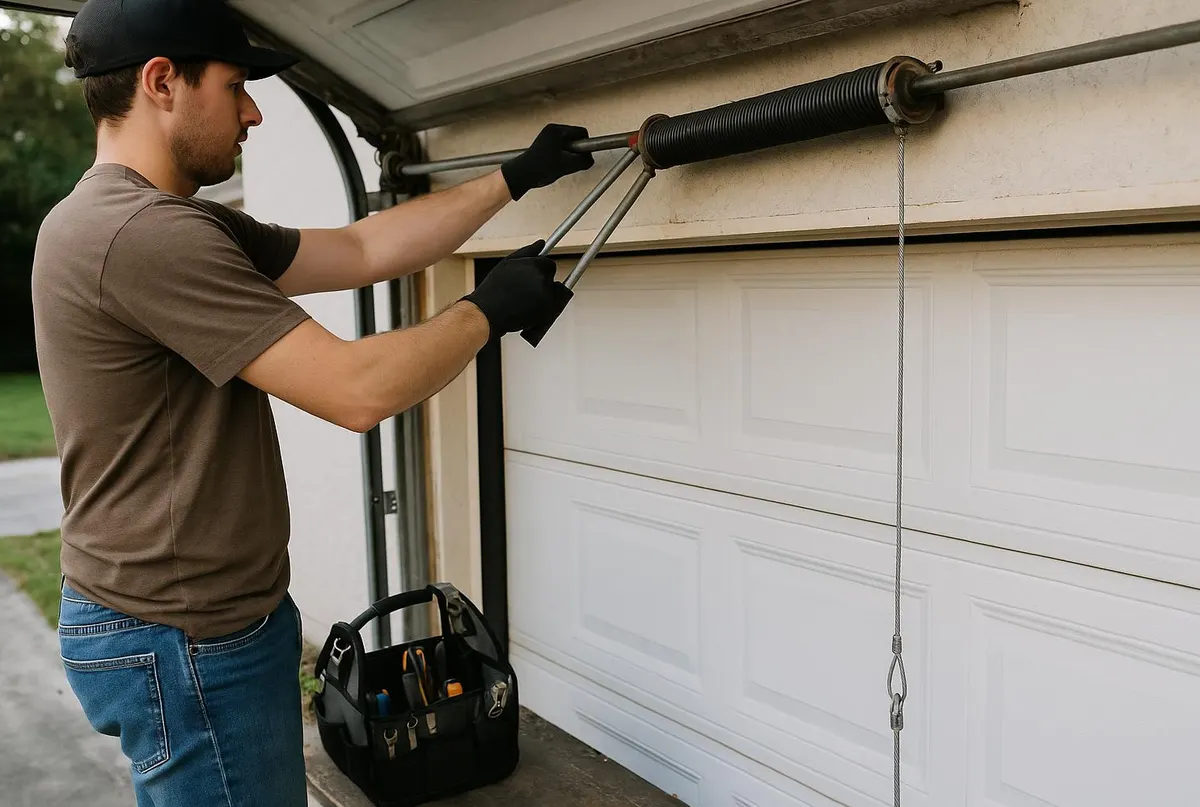
Metal springs contract slightly with temperature swings, and after enough humid-to-cool cycles, tension can drift just enough to make the door feel heavier to lift or cause the opener to strain at the start of its cycle. This is checked after the simpler mechanical issues because spring adjustment isn't a DIY job — torsion springs are under serious load, and the fix is a tensioning adjustment or, if the spring is worn or has started to sag, a full spring replacement.
5. Opener Force and Limit Settings
Last on the list, because it's often a symptom of everything above rather than its own cause. If the opener has been compensating for added friction for a while, its force settings may now be miscalibrated, which explains a door that reverses unexpectedly or struggles even after the mechanical issues are fixed. Resetting the force and limit settings restores normal operation, but only after the actual friction source has been addressed — otherwise the opener just goes back to straining.
When to Call Sunrise Garage Door
If the seal, tracks, and a fresh coat of lubricant don't solve it, or if lifting the door by hand still feels noticeably heavier than it should, it's time to call. That heaviness is a spring symptom, and Sunrise Garage Door handles spring replacement safely, along with full garage door maintenance visits that clean, lubricate, inspect rollers and tracks for salt-air corrosion, and recalibrate opener settings — so the same sticking doesn't come back every time the weather shifts.
If your garage door is acting frozen without the freeze, give Sunrise Garage Door a call — we serve Sunrise, FL and nearby communities and can have a technician out to sort it quickly.